Our Impact
Food Shift rescued nearly 1,000,000 pounds of food since our inception in 2012, preventing landfill waste and nourishing over 1,300 households weekly through nonprofit partners.

Food Shift
Mission & Values
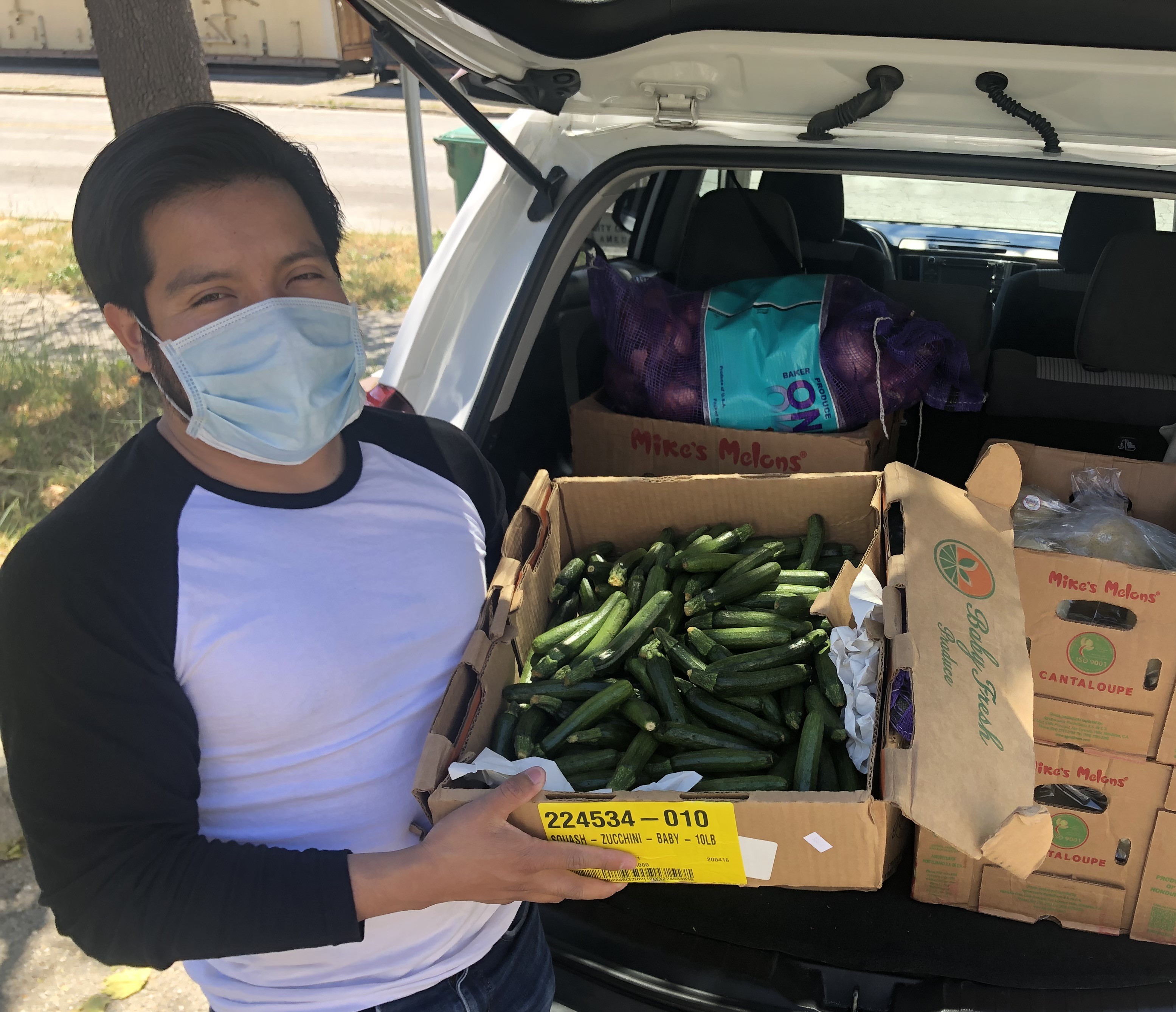
Consistently since 2020, Food Shift helped recover over $400,000 worth of culturally appropriate, fresh food for our neighbors facing food insecurity annually. By focusing on wholesale produce markets, where most surplus would otherwise be wasted, we fill critical gaps left by traditional food banks, whose offerings are still nearly half shelf-stable items.
Instead of asking our partners to pick up donations, Food Shift delivers fresh recovered produce directly to community organizations so they can focus on serving their clients with the foods they know and love. Through this partnership model and training other food recovery groups and food businesses, Food Shift supports trusted local leaders, strengthens existing relationships, and helps increase donation yields by up to 20% without adding to the carbon footprint of the food system.
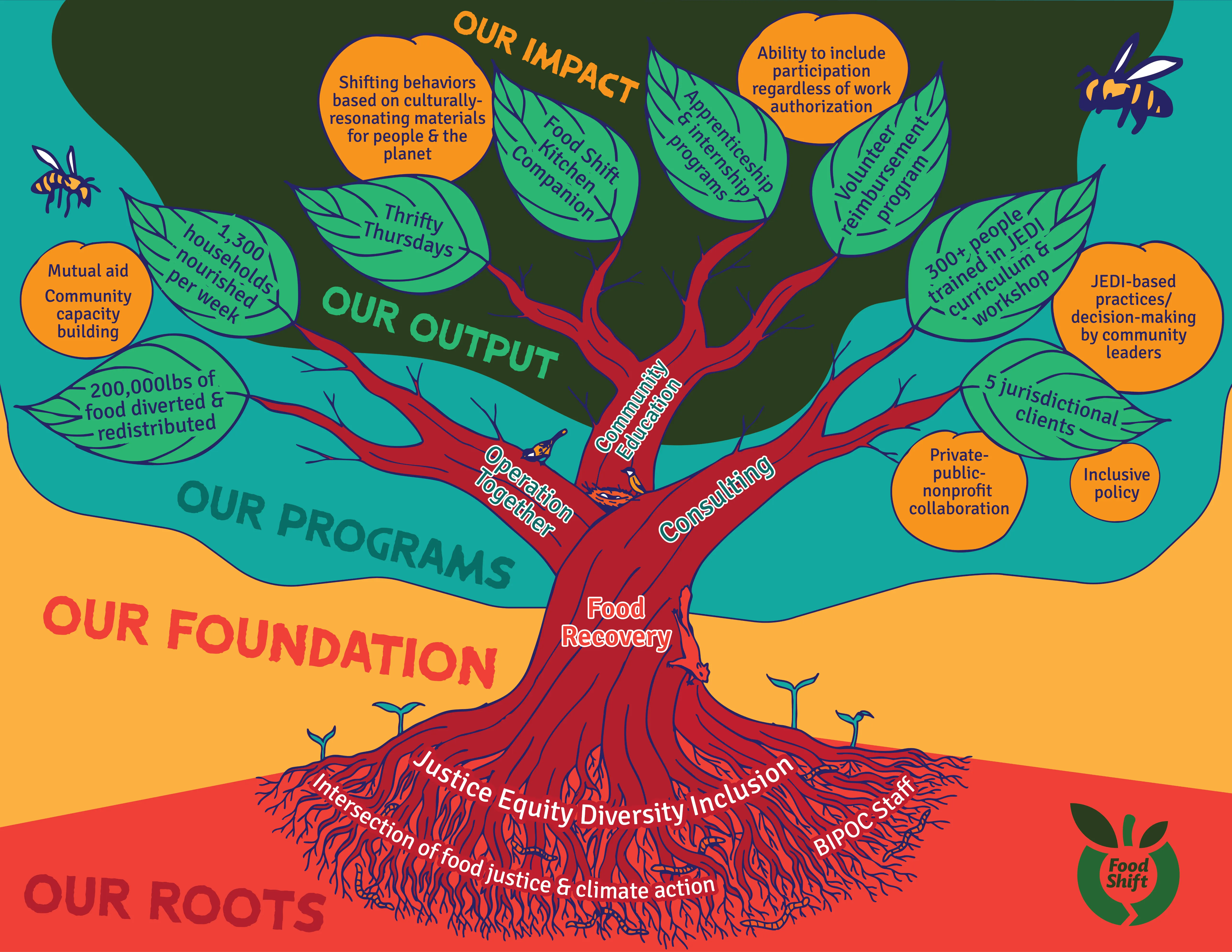
Our Impact Model
Food Shift envisions and practices an inclusive food ecosystem where surplus is shared, not wasted, building community power through deep local collaboration and capacity building.
Our core food recovery program, Operation Together, invites participants, food generators, and community partners to serve as stewards of a sustainable, resilient local food system. By uplifting these community-rooted practices as shared wisdom to businesses, governments, and peers, Food Shift scales impact without expanding its carbon footprint.
Through a triple-helix model that weaves together nonprofits, food businesses and haulers, and government agencies, Food Shift fosters mutually beneficial collaborations that sustain our work and create meaningful training opportunities for apprentices and interns overcoming employment discrimination.

Building Community with Overlooked Food



Impact Areas
These three branches are designed to feed one another, forming a holistic, interwoven approach rather than three independent pillars. Operation Together generates on-the-ground insight that shapes our Consulting and Community Education, while those efforts, in turn, strengthen and expand the local food recovery ecosystem that Operation Together depends on.
Operation Together
Food Shift’s food recovery program anchors our hyperlocal food security work, moving fresh, culturally meaningful surplus from wholesale markets to community partners that know their participants best. This branch nourishes over a thousand households weekly while modeling a community-led, climate-conscious food ecosystem.
Community Education
Community education transforms Food Shift’s day-to-day practices into shared wisdom through experiential learning for apprentices and interns facing employment discrimination, free online publications, and speaking engagements. This branch nurtures intergenerational learning and mutual aid that builds local leadership, shifts behaviors toward a more just, regenerative food system, and continually strengthens Operation Together with community-driven insight and care.
Consulting
Through consulting, Food Shift helps cities, schools, and food businesses design and implement equitable donation systems and SB 1383–aligned practices, and multi-lingual education. This branch turns on-the-ground lessons into scalable models that increase donation yields and reduce waste across jurisdictions, while the revenue it generates helps underwrite Operation Together and create career pathways for frontline food recovery workers.
Community Stories
Cianna’s Apprenticeship Journey
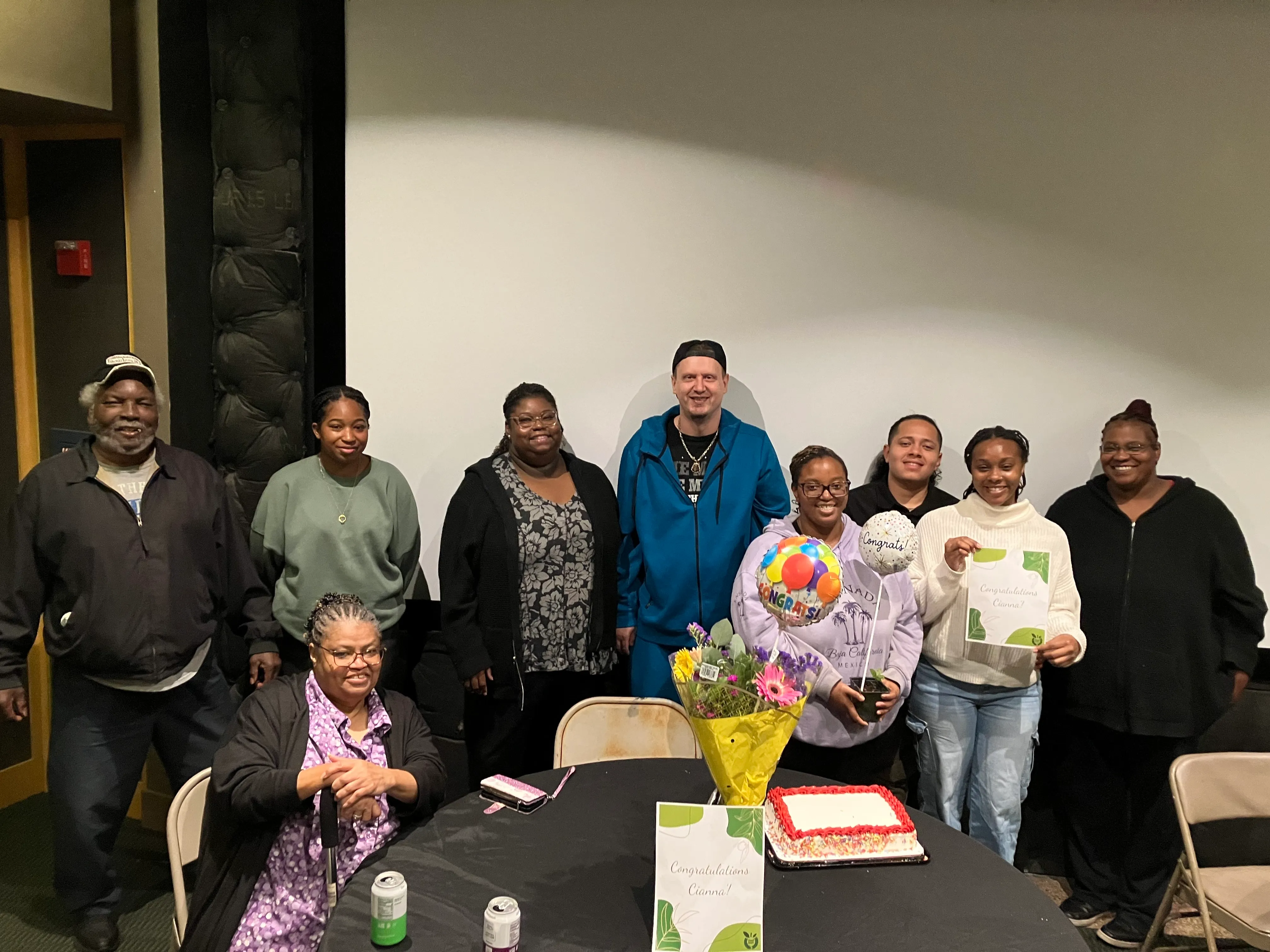
When Food Shift lost access to its kitchen in 2024, the team used the disruption as an opportunity to redesign its apprenticeship program in partnership with Alameda Point Collaborative’s Workforce Development Program. Cianna, the first apprentice in this new model, learned food safety, inventory systems, and weekly Whole Foods recovery through Operation Together, then honed her culinary skills with Chef Rudy of C’era Una Volta, culminating in a graduation feast surrounded by three generations of her family. She has since completed the Mandela Pathways Culinary Program and is now applying her skills in a professional kitchen at Casa de Chocolates, showing how community-rooted food recovery can open real career pathways.
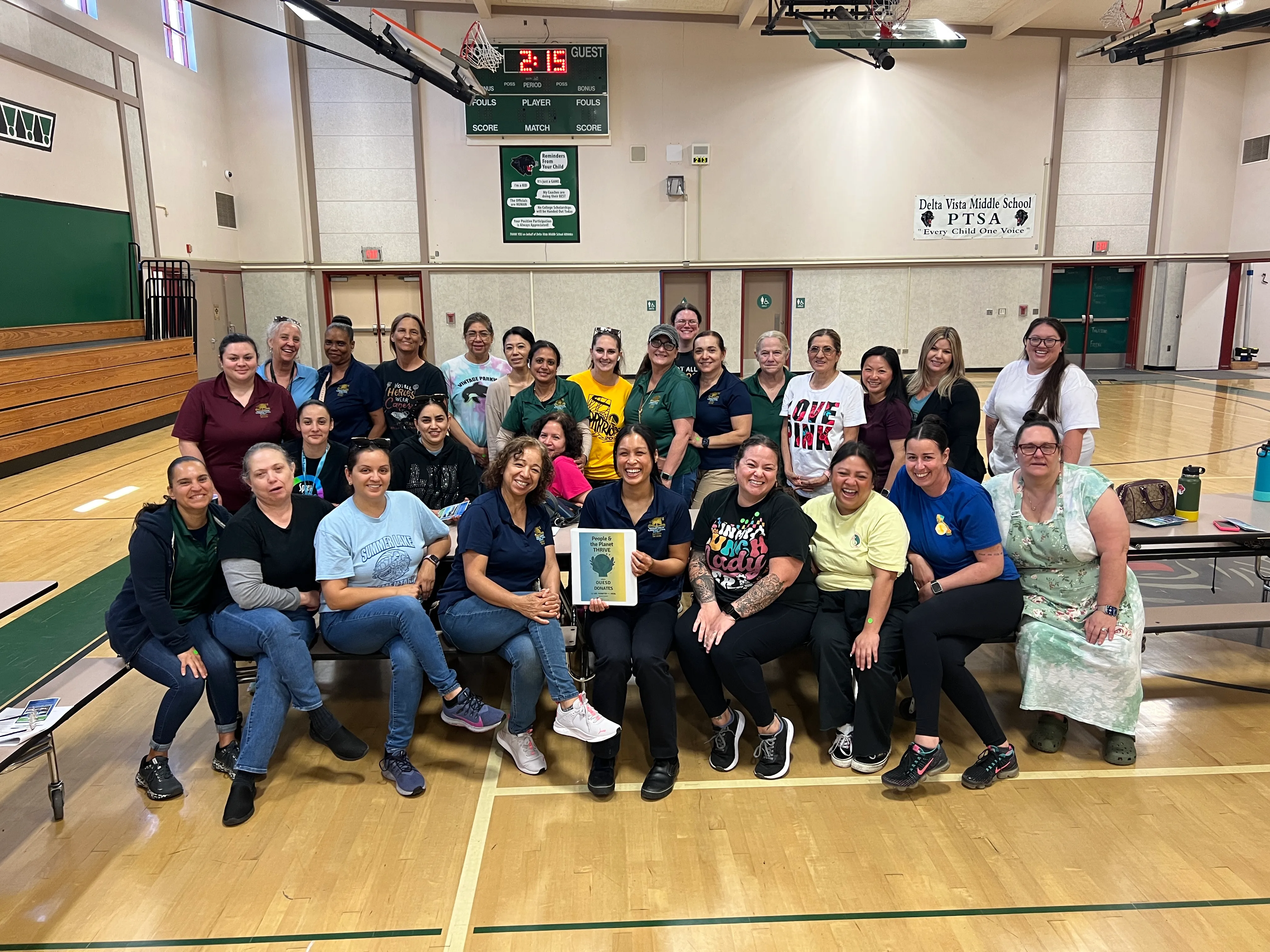
From Cafeterias to Climate Action: Nourishing Change
City of Oakley leaders entrusted Food Shift to help them turn SB 1383 requirements into a proactive, community-centered model other jurisdictions can learn from. Through multilingual trainings for cafeteria leaders from nine schools and district administrators, plus outreach, inspections, and creative program design, Oakley became one of the first school districts in the greater Bay Area to meet SB 1383 standards while reducing edible food waste and educating staff on donation practices that keep good food in the community. City of Oakley’s Community Development Director describes Food Shift as “more than just a group of people doing a job,” highlighting how shared diligence and care can turn regulatory requirements into meaningful climate and community impact.